Our Office
28562 Oso Parkway, Suite K
Rancho Santa Margarita,
CA 92688
CA 92688
Existing Patients: (949) 505-9901
New Patients: (949) 272-0877
Fax: (949) 505-9902
Visit Us Online

Tooth loss affects millions of people and can interrupt everyday routines — from enjoying a favorite meal to speaking clearly in public. Whether the result of decay, periodontal disease, or an injury, missing teeth change the way your mouth looks and functions. At Rise & Shine Dental Group, we focus on replacing teeth in a way that restores chewing ability, preserves oral health, and supports a natural appearance.
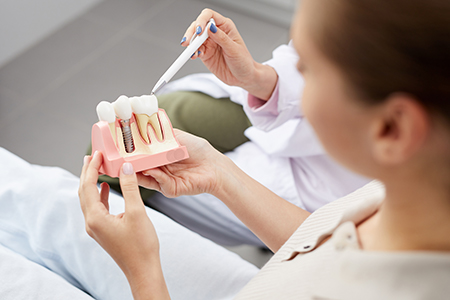
Dental implants are engineered to act much like the root of a natural tooth. A titanium or ceramic post is placed in the jaw, where it gradually integrates with bone and provides a stable foundation for a crown, bridge, or denture. Because implants recreate both form and function, they allow patients to eat, speak, and smile with confidence.
Modern implant dentistry emphasizes careful planning and predictable outcomes. We evaluate each patient’s overall health, bone availability, and aesthetic goals to develop an individualized plan. The goal is always the same: a long-lasting solution that supports oral health and facial structure while delivering a comfortable, natural result.
Traditional bridges and removable dentures remain useful options for many patients, but implants offer distinct advantages in terms of durability and biological preservation. Because implants transmit functional forces to the jawbone, they help maintain bone volume and facial contours over time — something that removable prostheses cannot reliably accomplish.
For patients concerned about adjacent teeth, implants can also be less invasive. A single-tooth implant supports a crown without requiring preparation of neighboring teeth, whereas a conventional bridge often needs healthy teeth to be altered to anchor the replacement. That preservation of natural tooth structure is an important consideration for long-term oral health.
Another practical benefit is stability. Implant-supported restorations are fixed or securely retained, which minimizes the movement, slipping, or sore spots that can occur with removable dentures. This stability tends to improve comfort, chewing efficiency, and overall patient satisfaction.
Successful implant treatment begins with a thorough diagnostic phase. This typically includes a clinical exam, digital X-rays, and sometimes 3D imaging to evaluate bone volume, nerve positions, and sinus anatomy. These data allow us to map ideal implant positions and design restorations that align with both function and aesthetics.
Placing an implant is generally performed as a minor outpatient surgical procedure. The treatment timeline varies by case: some patients receive a temporary restoration on the same day, while others follow a staged approach that allows the implant to integrate with the bone before the final crown or bridge is attached. Throughout, we discuss anesthesia and sedation options so patients feel informed and comfortable.
Healing times and follow-up care are key to long-term success. After placement, implants undergo a process called osseointegration, during which bone grows closely around the post. Regular checkups, good oral hygiene, and routine professional care help ensure the implant remains healthy and functional for years to come.
Implant dentistry is versatile: it can replace a single missing tooth, span multiple teeth with an implant-supported bridge, or restore an entire arch. The choice depends on the number of missing teeth, the quality and quantity of jawbone, and the patient’s functional and cosmetic expectations.
Single implants restored with custom crowns closely mimic a natural tooth in appearance and performance. For multiple adjacent missing teeth, implant-supported bridges reduce the need to alter healthy neighbors by using strategically placed implants to support a series of crowns. For those missing most or all teeth, a full-arch fixed solution or an implant-retained denture can provide a dramatic improvement in stability and bite force compared with removable prostheses.
Each option has specific clinical requirements and benefits, and our team explains the advantages and considerations for every approach so patients can make well-informed decisions that align with their lifestyle and goals.
Bone volume and quality are foundational to implant success. When a tooth is lost, the supporting bone can resorb over time, reducing the available structure needed to secure an implant. When this occurs, bone grafting procedures can rebuild and strengthen the site to support a stable implant.
Bone grafting can be performed at the time of extraction or as a preparatory step prior to implant placement. The techniques and materials vary, and the choice depends on how much augmentation is needed and the patient’s individual anatomy. In many cases, grafting increases the predictability of implant integration and improves long-term outcomes.
Maintaining bone health after implant placement relies on routine care and vigilance. Regular dental visits, proper oral hygiene, and attention to risk factors such as tobacco use or uncontrolled systemic conditions all contribute to the durability of implant restorations.
Missing teeth affect more than your smile — they influence nutrition, speech, and self-confidence. Today’s implant solutions make it possible to restore both appearance and function in a way that is durable and natural-looking. Our approach combines careful diagnostics, precise surgical technique, and beautiful restorative work to help patients reclaim comfortable, functional smiles.
If you’d like to learn whether dental implants are a good option for you, our team is available to review your case, answer questions, and outline a personalized treatment plan. Contact us for more information and to schedule a consultation so we can explore the best path forward for your smile.

If you've lost a tooth due to injury, decay, gum disease, or any other reason, we recommend dental implants to replace missing teeth. Dental implants come the closest to replicating the look, feel, and function of your natural teeth.
Dental implants are placed into the jawbone and mirror the same function as the root of a tooth. The procedure for dental implants is usually performed while a patient is sedated. Patients who undergo IV sedation must have an empty stomach and transportation home following the procedure. Most sedation patients will have little to no memory of the procedure occurring.
Generally, dental implants are made out of a biocompatible metal such as titanium. Biocompatible metals are also used for other common bone implants (such as shoulder, hip, and knee replacements). The visible portion of the implant is usually made out of porcelain and is custom-made to match your existing teeth.
Dental implants are designed to fuse to the bone, which makes them become permanent fixtures. Typically speaking, the success rate is nearly 100%. There are few cases in which the implant will not fuse as intended and must be removed. If this happens to occur, the procedure can be attempted again a few months later.
Dental implants are not usually covered by dental insurance, but may be covered under a patient's medical insurance. Our office and your insurance company can discuss coverage options with you based on your individual case and treatment plan.
It's easy... just take care of an implant as if it's a natural tooth! This involves regular brushing, flossing, and dental checkups. If you have any concerns about your implant, contact us immediately.
Dental implants are small posts, typically made from titanium or ceramic, that are placed into the jawbone to serve as artificial tooth roots. Once placed, the implant bonds with the surrounding bone through a natural process called osseointegration, creating a stable foundation for a crown, bridge, or denture. The final restoration is attached to an abutment on the implant so the replacement tooth both looks and functions like a natural tooth.
Because implants replace the root as well as the visible tooth, they restore chewing efficiency and contribute to long-term oral health by transmitting normal functional forces to the jaw. This stimulation helps preserve bone volume and facial contours, reducing the bone loss that often follows tooth loss. For many patients, implants provide a predictable, long-lasting alternative to traditional removable prostheses.
Good candidates for dental implants are adults who are free of active, untreated oral infections and who have sufficient jawbone to support an implant or are willing to undergo preparatory grafting procedures. Overall health factors such as controlled chronic conditions and a non-smoking status make implant treatment more predictable, though many systemic conditions can be managed to allow safe implant therapy. A comprehensive clinical exam and 3D imaging are used to assess bone volume, nerve location, and sinus position to determine candidacy.
Age alone is not a limiting factor; instead, candidacy depends on anatomy and health. When bone is insufficient, procedures like bone grafting or ridge augmentation can often rebuild the site to support implants. The treatment plan is individualized so patients understand the steps needed to achieve a successful outcome.
Implants differ from traditional bridges and removable dentures because they replace the tooth root as well as the crown, which preserves jawbone by transmitting functional forces into the bone. Conventional bridges require altering adjacent healthy teeth to anchor the prosthesis, while a single implant supports a crown without affecting neighboring teeth. Removable dentures can restore appearance and function, but they typically offer less stability and do not prevent the bone resorption that occurs after tooth loss.
From a functional standpoint, implant-supported restorations often provide superior chewing efficiency and comfort because they are fixed or securely retained. Implant solutions also allow for more natural speech and reduced movement compared with many removable options. The best choice depends on the number of missing teeth, bone anatomy, and the patient’s long-term goals, and your clinician will discuss the pros and cons of each approach.
The implant treatment process begins with a thorough diagnostic phase that includes a medical history review, clinical examination, digital X-rays, and often cone beam 3D imaging to map bone volume and anatomical structures. These records allow the team to plan precise implant positioning and to design restorations that match the patient’s bite and aesthetic goals. In many cases, a surgical guide derived from the planning data is used to place the implant predictably and safely.
Implant placement is usually performed as an outpatient procedure under local anesthesia and optional sedation for comfort. Depending on the case, a temporary prosthesis may be provided immediately or the site may be allowed to heal before attaching the final restoration. After placement, scheduled follow-up visits monitor healing and integration so the final crown, bridge, or denture can be connected when stability is achieved.
The entire timeline varies by case and can range from a few months for staged healing to shorter protocols for select immediate-load situations. Treatment sequencing may also include extractions, grafting, or sinus elevation when necessary to prepare the site. Clear communication about each phase helps patients understand expectations and recovery steps.
Osseointegration, the process by which bone bonds to the implant surface, typically takes several weeks to a few months depending on an individual patient’s biology and the location of the implant. Implants placed in the lower jaw often integrate more quickly than those in the upper jaw because of differences in bone density. Factors such as bone grafting, overall health, and smoking can also influence the timeline and are considered during treatment planning.
During the healing period patients are monitored with regular checkups to confirm stability and tissue health before the final restoration is attached. Good oral hygiene, adherence to postoperative instructions, and management of systemic conditions all support predictable healing. Your dental team will outline a clear follow-up schedule so you know when to expect each milestone.
Bone grafting or a sinus lift may be recommended when there is insufficient bone volume to securely place an implant, which can occur after long-standing tooth loss or following infection. Grafting restores or augments the ridge using the patient’s own bone, donor bone, or biocompatible materials to create a stable foundation for an implant. A sinus lift is a specialized grafting procedure performed in the upper posterior jaw when the sinus floor is too close to the planned implant site.
These procedures increase the predictability of implant integration and often allow implants to be placed in anatomically challenging situations. In many cases grafting can be performed at the time of extraction or as a separate preparatory surgery depending on the clinical scenario. Your clinician will explain the recommended approach, expected healing timeline, and how grafting improves the long-term prognosis for implant-supported restorations.
Implant placement is commonly performed using local anesthesia to numb the surgical area and ensure a pain-free experience, and most patients also elect to use conscious sedation or nitrous oxide for additional relaxation. For patients with higher anxiety or more extensive surgical needs, deeper levels of sedation under the supervision of trained personnel can be arranged. The specific anesthesia plan is tailored to the patient’s medical history, comfort preferences, and the complexity of the procedure.
Before treatment, the team reviews sedation options, fasting instructions, and any preoperative medications so patients are prepared and safe. During the procedure the dental team monitors comfort and vital signs, and postoperative pain is typically managed with prescribed or over-the-counter medications plus cold compresses and wound care. Clear postoperative instructions help minimize discomfort and promote efficient healing following implant surgery.
Caring for dental implants closely resembles the routine care for natural teeth: brush twice daily with a soft brush, clean between teeth and around implant restorations with floss or interdental cleaners, and maintain regular professional checkups. Professional maintenance visits allow your dental team to evaluate the health of the implant, surrounding gum tissue, and bite, and to perform specialized cleaning when needed. Good daily hygiene and periodontal maintenance are key factors in preventing infection around an implant.
Patients should also manage systemic health factors that influence oral health, such as controlling diabetes and avoiding tobacco, because these factors can affect tissue healing and long-term stability. If you notice changes like persistent redness, swelling, bleeding, or mobility of an implant-supported restoration, contact your dental provider promptly. Early evaluation and treatment of problems support more favorable outcomes.
Like any surgical procedure, implant treatment carries potential risks including infection, nerve irritation, sinus complications, and failure of osseointegration, although modern planning and technique reduce these occurrences. Thorough diagnostics, sterile surgical protocols, and careful patient selection help minimize risk, and the team reviews specific risks related to the individual’s anatomy and health. When issues are identified early, many complications can be addressed with predictable corrective steps.
Management of complications may involve antibiotics, surgical revision, removal and replacement of a failing implant, or grafting to restore compromised bone. Regular follow-up visits are designed to detect early signs of trouble so interventions can be performed before problems progress. Open communication with the clinician about symptoms and adherence to postoperative instructions are important parts of safe, effective complication management.
To explore implant treatment, request a consultation so your dental history, clinical exam, and diagnostic imaging can be reviewed and a personalized plan can be developed. During the consultation the team will discuss available restoration options, necessary preparatory procedures, and a timeline tailored to your needs so you can make an informed decision. The visit is an opportunity to ask questions about the sequence of care, comfort measures, and what to expect at each stage.
If you prefer care close to home, our office in Rancho Santa Margarita offers modern imaging and restorative capabilities to evaluate implant candidacy and coordinate surgical and prosthetic phases. Contact the practice through the website or the office contact channels listed on the Rise & Shine Dental Group pages to arrange a consultation and begin a tailored treatment plan for rebuilding your smile.