Our Office
28562 Oso Parkway, Suite K
Rancho Santa Margarita,
CA 92688
CA 92688
Existing Patients: (949) 505-9901
New Patients: (949) 272-0877
Fax: (949) 505-9902
Visit Us Online

At the office of Rise & Shine Dental Group, we combine modern materials and proven techniques to restore teeth that are cracked, worn, or weakened. Ceramic crowns are one of the most versatile solutions available — they protect damaged teeth, restore chewing function, and recreate a natural-looking smile. Our goal is to explain when a ceramic crown makes sense and how we decide which material will deliver the best long-term result.
Many people assume crowns are purely cosmetic, but their primary job is structural: they surround and strengthen a compromised tooth so it can withstand daily forces without breaking. Advances in dental ceramics mean today's crowns are not only strong but also mimic the translucency and texture of natural enamel, making them an excellent option when both durability and appearance matter.
Every restorative plan we recommend begins with a careful assessment of your bite, the health of surrounding teeth and gums, and the specific functional demands on the tooth in question. By pairing clinical judgment with modern digital tools, we create restorations that perform well and blend seamlessly with your smile.
Comfort and clear communication are central to our approach. We take time to review the treatment steps, materials, and expected outcomes so you feel confident moving forward with care that protects both oral health and appearance.
Not every damaged tooth needs a crown, but there are clear situations where it provides the most predictable protection. Crowns are full-coverage restorations that encase the visible portion of a tooth, restoring its shape and strengthening the remaining structure. When more than half of a tooth’s surface is compromised, a crown often offers better long-term durability than a large filling.
Crowns are commonly recommended after root canal therapy because the tooth can become brittle once nerve tissue is removed. They’re also the treatment of choice for teeth with substantial fractures or for those that have large, failing restorations. In these cases, a crown reduces the risk of further breakage and helps preserve the tooth for years to come.
Other times a crown is the right solution when aesthetics and function must be balanced — for example, when a misshapen or heavily stained tooth won’t respond well to whitening or veneers, a ceramic crown can restore a natural contour and color while protecting the tooth beneath.
We evaluate each case carefully and explain alternatives where appropriate, so you understand why a crown is being suggested and what to expect during the process.
To rebuild a tooth with extensive decay or structural damage
To replace a large or failing filling that no longer provides adequate support
To restore a dental implant with a lifelike crown
To cap the abutment teeth that anchor a traditional dental bridge
To strengthen and protect a tooth after root canal treatment
To improve the shape, color, or proportion of a single tooth when cosmetic concerns and strength both matter
To correct bite issues that place uneven forces on a vulnerable tooth

All-ceramic crowns have become widely favored because they combine excellent aesthetics with strong biocompatibility. Unlike restorations that rely on a metal substructure, modern ceramic materials transmit and scatter light in a way that closely resembles natural enamel, so they look lifelike under different lighting conditions.
Today's dental ceramics are engineered for strength as well as beauty. High-quality ceramics resist staining, wear well against opposing teeth, and eliminate visible metal margins at the gumline — a common cosmetic drawback of older crown systems. For patients with metal sensitivities, an all-ceramic restoration is often the safer, more comfortable choice.
Ceramic crowns also allow for more conservative tooth preparation in many situations. Because certain ceramics can be both strong and thin, less natural tooth structure needs to be removed to accommodate the restoration, which helps preserve the tooth’s long-term health.
In our practice we prioritize materials that deliver predictable longevity and natural appearance, and we match the ceramic to the tooth’s location and the patient’s functional needs to strike the ideal balance between durability and aesthetics.
They reproduce translucency and surface texture similar to natural teeth
They can often be fabricated with less reduction of the original tooth structure
They are lighter in weight and free of metal, which can be preferable for comfort and biocompatibility
They are gentler on gum tissue and less likely to create a dark line at the margin
They resist staining and maintain their color over time
They provide a metal-free option for patients with metal allergies or sensitivities
They offer a seamless, tooth-like result that blends with adjacent natural teeth
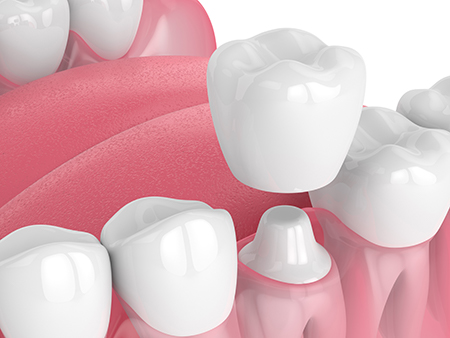
Not all ceramics are identical; the choice depends on where the crown will sit in the mouth and the forces it must endure. For front teeth, where translucency and subtle color matching are critical, materials that closely mimic enamel are preferred. For molars and teeth that handle heavy chewing forces, tougher ceramics that resist fracture may be a better fit.
Common options include glass-ceramics that offer exceptional esthetics, pressed or layered porcelains that allow fine shading, and zirconia-based ceramics known for strength. Each option has distinct advantages, and the decision considers the tooth’s position, bite dynamics, and the aesthetic expectations of the patient.
We also factor in the type of cement and bonding protocol to ensure the restoration is securely attached and performs well over time. Where appropriate, we discuss the clinical trade-offs of each material so patients understand why a specific ceramic was recommended.
Selecting the right material is as much about the biology and biomechanics of the tooth as it is about appearance. Our clinicians evaluate all of these elements together to arrive at a solution tailored to your needs.
Lithium disilicate — excellent for front and some back teeth when aesthetics are a priority
Leucite-reinforced porcelains — strong, esthetic options for visible teeth
Monolithic zirconia — highly durable choices for molars and high-stress areas
High-translucency zirconia — balances strength with improved optical properties for more natural-looking results

Accurate diagnostics and careful planning are essential to successful crown work. We use digital imaging and precise impressions to evaluate the tooth’s anatomy and how the proposed crown will interact with the bite. This reduces guesswork and helps prevent complications down the road.
Where appropriate, same-day crown technology allows us to design and mill a restoration during a single visit, avoiding temporary crowns and multiple appointments. Whether a restoration is fabricated in-house or in a trusted lab, we maintain strict quality standards to ensure fit, occlusion, and appearance meet our expectations.
We also emphasize gentle preparation and tissue management so the final margin of the crown sits at a healthy, stable position relative to the gumline. Proper margin placement and polished contours support periodontal health and make it easier to keep the area clean.
Follow-up care is part of the process: we check fit, bite, and comfort after placement and provide guidance on maintaining crowns for long-term success through good oral hygiene and routine dental visits.
Our team focuses on combining technical excellence with clear communication. We take time to explain the reasons behind each recommendation and walk patients through the steps involved so they know what to expect. That approach fosters confidence and helps people make informed decisions about their oral health.
We also stay current with material science and digital workflows so the choices we offer reflect contemporary standards in restorative dentistry. That commitment helps us deliver crowns that look natural, function reliably, and integrate well with the surrounding tissues.
Whether you need a single crown to protect a compromised tooth or are considering crowns as part of a broader restorative plan, we tailor every treatment to your anatomy and goals. If you have questions about ceramic crowns or would like to learn which approach is best for your smile, our team is ready to help.
To learn more about ceramic crowns and whether they’re right for you, please contact us for additional information.

While a dental filling is designed to replace a portion of a decayed or damaged tooth, a dental crown offers full coverage to restore the tooth’s entire outer surface. A well-fitting dental crown not only protects and strengthens the underlying tooth structure, but it also restores the tooth’s appearance and function.
The procedure for getting an all-ceramic crown is much like the procedure for getting any other type of crown. In all cases, the tooth needs to be prepared, an impression taken, and a permanent crown cemented into place. A single all-ceramic crown can typically be fabricated over the course of two visits. However, with CAD/CAM technology, a same-day crown can be fabricated from start to finish in a single visit. With the first approach, a temporary crown is typically worn until the second visit, when the permanent restoration is placed. As with every treatment plan, our office will explain your best options in care.
As the name implies, a temporary crown is only worn for a short time until the permanent crown is placed. A temporary crown is typically fabricated from durable tooth-colored dental acrylics. While designed to protect the underlying tooth between appointments, and until your new permanent crown gets placed, a temporary crown is also fabricated to look like a natural tooth and maintain the look of your smile.
While you should feel better having an attractive and functional tooth to restore your smile, your tooth may feel a little sensitive following treatment. This initial sensitivity will subside. We take great care to make sure your new restoration looks great, fits well, and your bite is perfect. However, we’re always happy to make any minor adjustments to ensure your comfort.
With some exceptions, teeth with root canal procedures are typically restored and protected from further damage with a full-coverage crown. Based on what’s best for your smile, our office will recommend the most appropriate restoration to maintain the health and longevity of your tooth following a root canal procedure.
A dental crown is a long-term restoration that, if properly cared for, can serve you well for many years to come. Once your new crown is placed, it requires the same brushing, flossing, and periodic checkups as your natural teeth. Avoid biting your fingernails and chewing on hard or sticky objects such as ice, pencils, or taffy, which can damage or loosen your crown. Remember, clenching and grinding your teeth puts excessive pressure on both natural teeth and dental restorations. Unless treated, this habit can compromise the longevity and integrity of your dental work, including crowns.
Although your new all-ceramic crown restores the tooth's strength, form, and function, you can still develop dental disease in the absence of proper care. To prevent gum disease and tooth decay, it’s essential to brush and floss as instructed and see our office for routine checkups, cleanings, and care.
How long a dental crown lasts depends on various factors, including your level of oral care, diet, and oral habits. While the standard answer is that dental crowns can last anywhere from 5 to 15 years, existing literature confirms that most dental crowns remain in place at 15 to 20 years.
At the office of Rise & Shine Dental Group, we strive to provide the highest quality of care to address all your dental needs. Once we’ve had the opportunity to examine your smile, we can give you a clear picture of any dental issues that are present, along with a quote for how much treatment will be. The cost of dental crowns can vary a little, depending on the type of crown and its location. Our goals are to provide the highest quality of care and help patients begin treatment without additional financial stress or delay. We’re always happy to answer all your questions on dental insurance coverage, available financing, and payment plans.
Coverage for all-ceramic crowns depends on your dental insurance plan. Today, many dental plans provide some level of coverage for all-ceramic crowns. At the office of Rise & Shine Dental Group, we work with patients to optimize their dental benefits and get the care they need to maintain healthy and beautiful smiles!
Ceramic crowns are full-coverage restorations made from tooth-colored materials designed to encase the visible portion of a damaged tooth. They restore the tooth’s shape, protect weakened structure, and reestablish normal chewing function while mimicking the optical properties of natural enamel. Modern ceramics transmit and reflect light in ways that produce a lifelike appearance under varied lighting conditions.
Like all crowns, ceramic restorations distribute biting forces across the remaining tooth to reduce the risk of fracture and further damage. When bonded properly, they form a durable interface with the prepared tooth and the chosen dental cement, improving function and comfort. Their metal-free composition also reduces the potential for visible dark margins and increases biocompatibility for many patients.
Ceramic crowns are typically recommended when a tooth has lost more than half of its structure or when a large filling can no longer provide adequate support. In these situations a crown offers more predictable long-term protection than repeated or oversized restorations. Crowns are also commonly placed after root canal therapy because treated teeth can become brittle and are at higher risk of fracture.
Crowns are also appropriate when both function and esthetics matter, such as a heavily stained or misshapen front tooth that will not respond well to whitening or veneers. They are used to protect fractured teeth, replace failing restorations, and as the restorative component for dental implants or bridge abutments. Our clinicians evaluate the tooth’s condition, occlusion, and surrounding tissues to determine whether a crown provides the best prognosis.
All-ceramic crowns offer superior esthetics compared with porcelain-fused-to-metal (PFM) restorations because they lack a metal substructure that can create a dark line at the gumline. Advances in ceramic materials now allow restorations that rival the strength of metal-based systems while providing more natural translucency. For patients with metal sensitivities, all-ceramic options are often the preferred choice due to improved biocompatibility.
That said, some ceramics are engineered specifically for high-stress posterior applications, while other systems excel in anterior esthetics; choosing the appropriate system is therefore case dependent. In situations with extreme occlusal forces, monolithic zirconia may be selected for its fracture resistance, whereas glass-ceramics or layered porcelains may be chosen for visible front teeth. Our team discusses these trade-offs so patients understand why a particular material is recommended for their tooth.
Common ceramic materials include lithium disilicate, leucite-reinforced porcelains, monolithic zirconia, and high-translucency zirconia, each with distinct strengths and optical properties. Lithium disilicate offers excellent esthetics and good strength for many anterior and some posterior crowns, while monolithic zirconia provides exceptional durability for molars and high-stress areas. High-translucency zirconia balances improved appearance with greater toughness than traditional translucent ceramics.
Selection depends on tooth position, bite dynamics, esthetic goals, and the amount of remaining tooth structure. We also consider the cementation protocol and whether adhesive bonding will be used, since some ceramics respond better to bonding than conventional cementation. The decision is made collaboratively, weighing functional demands against the desired optical outcome.
The procedure begins with a thorough diagnostic evaluation, including digital imaging and a clinical exam to assess tooth anatomy, bite, and surrounding tissues. Tooth preparation involves shaping the tooth to create space for the crown while preserving as much healthy structure as possible; impressions or digital scans are then taken to capture precise details. If a laboratory-fabricated crown is planned, a temporary restoration may be placed to protect the tooth until the final crown is ready.
When the final crown is received or milled, the dentist verifies fit, occlusion, and esthetics before cementation or bonding. Proper margin seating and polished contours are confirmed to support periodontal health and ease of home care. We schedule follow-up checks to confirm comfort and function, and to address any minor adjustments that may be necessary.
Same-day crown technology uses in-office digital scanning and milling to design and fabricate a ceramic restoration during a single visit, eliminating the need for temporaries in many cases. This approach is appropriate when the clinical situation allows for a single-stage workflow, such as straightforward preparations and limited shade-matching complexity. It is particularly useful for patients who prefer fewer appointments and predictable same-day turnaround.
Some cases still benefit from laboratory-fabricated crowns, especially if complex shading, layered porcelain, or specialized characterization is required for an optimal esthetic outcome. The choice between same-day and lab-fabricated restorations is made based on case complexity and the material selected. Our team explains the advantages and limitations of each workflow so patients can make an informed decision.
Routine care for ceramic crowns centers on excellent oral hygiene and regular dental visits; brushing twice daily with a fluoride toothpaste and daily interdental cleaning help prevent decay at the crown margin and maintain gum health. Avoiding very hard or highly abrasive habits, such as chewing ice or opening packages with teeth, reduces the risk of chipping or fracture. If you grind or clench your teeth, wearing a protective nightguard can reduce excessive forces that shorten the lifespan of a crown.
Regular dental exams and professional cleanings also allow clinicians to monitor crown margins, occlusion, and surrounding periodontal tissues. Early detection of marginal issues, recurrent decay, or wear on opposing teeth enables timely intervention and preserves the restoration. Following these maintenance steps supports predictable, long-term performance of ceramic crowns.
While ceramic crowns are predictable restorations, potential complications include sensitivity after preparation, marginal leakage leading to recurrent decay, chipping or fracture of the ceramic, and issues with occlusion that require adjustment. Sensitivity often resolves as the tooth heals, but persistent pain or bite discomfort should be evaluated promptly. Marginal gaps or poor cementation can increase the risk of decay, which is why accurate impressions and proper bonding protocols are important.
Certain ceramics are more prone to chipping if unsupported by adequate tooth structure or if subjected to heavy, off-axis forces. In some cases a repair or replacement may be necessary to restore function and esthetics. Our practice emphasizes precise planning, appropriate material selection, and careful preparation to minimize these risks and manage complications should they arise.
Ceramic crowns are commonly used as the restorative component for implant-supported teeth and as the caps for abutment teeth in traditional bridges. On implants, a ceramic crown can be either screw-retained or cement-retained, and the choice depends on implant position, retrievability needs, and esthetic requirements. For bridge abutments, crowns must be designed to distribute forces appropriately across the span and protect the supporting teeth.
Material selection for implant and bridge restorations takes into account occlusal loads and accessibility for hygiene. Monolithic zirconia is often selected for posterior implant crowns due to its strength, while more translucent ceramics may be chosen for visible zones when esthetics are paramount. Proper planning and fabrication ensure the final restorations function reliably and integrate with surrounding tissues.
Our clinicians combine digital technology, detailed shade selection, and collaboration with experienced dental technicians to achieve lifelike color and texture. We use digital scans and high-quality photographs to capture the tooth’s translucency, surface characterization, and surrounding gingival tones, then select ceramics that reproduce those optical qualities. When appropriate, we utilize same-day milling or trusted laboratory workflows to control fit and finish.
Precision in preparation and meticulous verification of margins, contacts, and occlusion are essential to a seamless result, and we perform careful adjustments at try-in to optimize appearance and function. Follow-up assessments allow us to confirm the restoration integrates well with the bite and surrounding tissues. These steps reflect our commitment to predictable esthetic outcomes and long-term restorative success at Rise & Shine Dental Group.