Our Office
28562 Oso Parkway, Suite K
Rancho Santa Margarita,
CA 92688
CA 92688
Existing Patients: (949) 505-9901
New Patients: (949) 272-0877
Fax: (949) 505-9902
Visit Us Online

For teeth with imperfections that cannot be addressed with teeth whitening procedures, but are not so flawed as to require full coverage crowns, dental veneers can provide the desired cosmetic improvements.
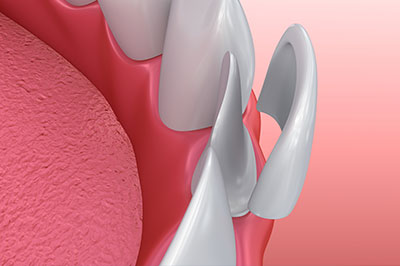
Dental veneers are custom-fabricated facings that offer a conservative and cosmetically pleasing way to improve the appearance of teeth that are chipped, gapped, worn, slightly crooked, misshapen or darkly stained. With dental veneers, the color, shape, size, and length of the teeth can be changed for the better. Bonded to the front surfaces of the teeth, veneers can be used to enhance the appearance of a single tooth or multiple anterior teeth.
The two most common types of veneers are porcelain veneers, which are also known as porcelain laminates, and composite veneers. While porcelain veneers are the most commonly offered option in care, composite veneers can also achieve excellent results. Starting with a smile makeover consultation and a comprehensive assessment of a patient’s oral health as well as a discussion of the cosmetic goals, the dentist will determine a treatment plan to achieve the most pleasing outcome of care.
Porcelain Veneers
Porcelain veneers are ultra-thin facings that are custom fabricated from the highest grade of dental ceramics and offer the following benefits:
Composite Veneers
When direct composite veneers are the selected method of care, the dentist applies carefully selected shades of tooth-colored composite resins to the fronts of the involved teeth. As the composite resin is placed, it is meticulously sculpted to create the desired shape, length and overall form of each tooth. Each layer of applied composite is then cured with a special light, and additional layers of composite are placed as required to achieve an aesthetically pleasing and functional result. Once the final result is completely set, the dentist will smooth and polish the direct composite veneers to a naturally brilliant finish.
While composite veneers frequently offer the advantages of being a single visit procedure, easy to repair and an economical alternative to porcelain veneers, they are not as strong or resistant to staining and wear as dental ceramics. However, by avoiding certain dietary choices and habits, practicing good oral hygiene and getting routine dental care, direct composite veneers can offer an effective and long lasting cosmetic smile improvement.
Determining if a veneer is suitable or a full-coverage crown is required depends on the extent of the tooth's defects and the remaining amount of healthy tooth structure. For teeth with imperfections that cannot be remedied with a teeth whitening procedure, dental veneers often provide the desired cosmetic improvements. However, a significantly undersized, misshapen, chipped, or darkly stained tooth usually requires a full coverage crown.
Porcelain veneers are fabricated from the highest grade of dental ceramics, which reflect light in much the same way as the enamel of natural teeth. In addition to this feature, dental porcelain is resistant to stains and discolorations, keeping your smile white and vibrant for years to come.
Porcelain veneers are ultra-thin customized facings that become strong and durable once bonded to the underlying teeth. With proper hygiene and routine dental care, veneers provide a cosmetic solution that not only looks and feels completely natural but is also long lasting.
However, just as harmful oral habits can affect your natural teeth, they can also cause damage to your veneers. To prevent chipping, cracking, or dislodging a veneer, avoid nail biting, chewing on hard candies, ice, pens, or pencils, and opening bottles or other objects with your teeth. Also, remember to protect your smile on the playing field by wearing a properly fitted sports mouthguard.
Tooth grinding or bruxism is another important consideration in care. If you clench or grind your teeth, you may need to wear a night guard to help protect your new smile or discuss other options with our office.
As versatile as they are beautiful, dental veneers can be applied to a single tooth in need of cosmetic improvement or multiple front teeth to dramatically improve the look of your smile. Whatever the case may be, dental veneers provide highly satisfying results to create a smile; you'll feel confident sharing with the world.
Among the many benefits offered by dental veneers is their ability to mask a range of imperfections at once. In addition to covering stains or discolorations on the front surface of a tooth, the size and shape of a veneer can also be customize to improve the tooth's contours and dimensions. At the same time veneers create a whiter and more vibrant smile; they can also lengthen or widen a tooth, close minor gaps, and address other minor alignment issues.
The two most common types of veneers are porcelain veneers, also known as porcelain laminates, and composite veneers. Although porcelain veneers are the most commonly offered option in care, composite veneers fabricated directly on the tooth can also achieve excellent results. You may have also heard the term no-prep veneer. It refers to a type of porcelain veneer that requires little to no preparation of the underlying dental enamel. At your consultation visit, we'll discuss your best options in care.
Once they're in place, your veneers are also easy to care for and maintain. Simply by brushing, flossing, and visiting our office for periodic checkups, you can successfully protect and preserve your new and beautiful smile.
Although certain procedures that are considered cosmetic may not be covered by dental insurance, veneers remain a worthwhile investment in your smile. Based on the unique considerations of each case, we develop treatment plans that consider specific dental needs, cosmetic goals, and budget. Our experienced and friendly office staff can address all your insurance questions and review various payment and financing options.
At the office of Rise & Shine Dental Group, we value patient input and pay close attention to your treatment goals, concerns, and expectations in care. When it comes to cosmetic dentistry, we recognize that every smile is unique and never take a “one size fits all” approach to care. We utilize the most advanced diagnostic technology and treatment methods to assess your smile and to design your porcelain veneers for a precise fit and optimal aesthetics.
As experienced providers of care, we provide highly personalized treatment, combining state-of-the-art technology with an artistic touch to produce long-lasting and aesthetically pleasing results of care.
Dental veneers are thin, custom-made shells that cover the front surface of teeth to improve appearance and function. They are designed to match surrounding teeth in color and contour so the restoration blends seamlessly with the smile. When properly fabricated and bonded, veneers resist staining and reflect light similarly to natural enamel, producing a lifelike result.
The veneer process begins with an evaluation of tooth structure, bite and overall oral health to confirm suitability. The tooth surface and the inner surface of the veneer are prepared with adhesive protocols that create a strong, durable bond. Once bonded, veneers become an integrated part of the tooth's outer surface and can withstand normal chewing forces when placed correctly.
Good candidates for veneers are adult patients with healthy gums and teeth who want to address cosmetic concerns such as chips, persistent discoloration, small gaps or minor misalignment. Patients with active decay, significant structural damage or uncontrolled gum disease will typically need treatment for those conditions before veneers are considered. An individualized exam helps determine whether enough enamel remains and whether the bite is favorable for long-term success.
The decision also considers patient expectations and oral habits such as grinding or using teeth as tools, which can increase the risk of veneer damage. In some cases, conservative alternatives like direct composite bonding or orthodontic treatment may be recommended instead of veneers. A thorough consultation clarifies the best path to meet aesthetic goals while protecting oral health.
The two primary veneer materials are porcelain and tooth-colored composite. Porcelain veneers are prized for their translucency and ability to mimic natural enamel with long-term color stability, while composite veneers can often be completed in a single visit and require less tooth alteration in certain cases. The aesthetic outcome for composites depends heavily on the clinician's skill and the quality of the composite materials used.
When selecting a material, dentists weigh factors such as the amount of existing enamel, the patient's bite, desired longevity and cosmetic expectations. Porcelain typically offers superior stain resistance and lifelike optical properties, whereas composite may be more appropriate for minor corrections or when a more conservative approach is preferred. The practice will explain the advantages and limitations of each option so patients can make an informed choice.
Treatment usually starts with a consultation that includes an exam, photographs and a discussion of your cosmetic goals. If porcelain veneers are chosen, a minimal amount of enamel is often smoothed to create space for the shell, then a digital scan or impression is taken and sent to a dental laboratory for fabrication; temporary coverings may be used while the permanent veneers are made. For composite veneers, direct bonding is applied and shaped chairside, which can shorten the overall timeline.
At the final visit, each veneer is tested for fit, shade and contour and adjusted as needed to ensure a comfortable bite and natural appearance. The veneers are bonded using a specialized resin and light-curing process, and a brief follow-up appointment allows the dentist to confirm fit and make minor refinements. Throughout the process you will be guided on postoperative care and what to expect as your mouth adapts.
Caring for veneers is much like caring for natural teeth: regular brushing with a nonabrasive toothpaste, daily flossing and routine dental checkups are essential. Professional cleanings help control plaque and maintain healthy gum tissue at the margin where the veneer meets the tooth, which supports a natural-looking transition. Maintaining good oral hygiene and addressing any gum issues promptly helps preserve both the veneer and the underlying tooth.
Patients should avoid habits that place excessive stress on front teeth, such as biting hard objects, using teeth as tools or persistent nail-biting, as these increase the risk of chipping. If you clench or grind your teeth, your dentist may recommend a nightguard to protect veneers and natural teeth from excessive forces. Regular dental visits also allow early detection and repair of any minor chips or marginal concerns before they become larger problems.
The degree of reversibility depends on the type of veneer and how much enamel is altered during preparation. Modern porcelain veneers are often ultra-thin and may require only minimal enamel reduction so the restoration sits flush with adjacent teeth, but some tooth alteration is usually involved to achieve optimal aesthetics and fit. Composite veneers can be more conservative and in some cases require little to no permanent removal of enamel, though the final decision depends on individual tooth anatomy and treatment goals.
Because some enamel modification can be permanent, the dentist discusses the benefits and limitations during the consultation so patients understand the long-term implications. The focus is always on conserving healthy tooth structure while achieving a stable, natural-looking outcome. If preservation of enamel is a priority, the clinician will explore less invasive alternatives and explain how each option affects long-term maintenance.
Yes, veneers are frequently used to address a combination of cosmetic issues, including mild misalignment, small gaps and intrinsic or persistent discoloration that does not respond to whitening. By reshaping the visible front surfaces, veneers can create a more uniform tooth length and contour while bringing color and alignment into harmony with adjacent teeth. This multi-purpose capability makes veneers a practical choice for patients seeking comprehensive aesthetic improvements without extended orthodontic treatment.
That said, veneers are not a substitute for orthodontics when significant tooth movement is required to correct bite problems or severe misalignment. During the consultation the dentist evaluates whether veneers alone will produce a healthy, functional result or whether adjunctive treatments such as limited orthodontics are necessary. A combined approach can sometimes yield the best balance of function and aesthetics for complex cases.
The longevity of veneers varies with material choice, oral hygiene, bite forces and personal habits, but many patients enjoy durable results for years when veneers are well cared for. Porcelain veneers generally offer greater resistance to staining and wear and tend to last longer than direct composite in typical clinical situations. Factors such as clenching, grinding, chewing on hard objects or poor oral hygiene can shorten the service life of any restoration.
Regular dental checkups allow the dentist to monitor the veneers and the health of the underlying teeth and gums, addressing wear or minor defects early. Using protective appliances like nightguards when indicated and following recommended maintenance routines help extend the useful life of veneers. If a veneer chips or becomes compromised, timely repair or replacement preserves overall oral health and aesthetic continuity.
Contemporary veneer work is intended to appear natural and harmonious with surrounding teeth by carefully matching shape, translucency and shade. During the planning stage the dentist evaluates the color, texture and light-reflective properties of adjacent teeth and selects a shade that complements your overall smile. Dental laboratories and clinicians use layered porcelain techniques or skilled composite shading to reproduce subtle variations and achieve a lifelike appearance.
Communication between the patient, dentist and dental technician is important to set realistic expectations about final outcomes, including how white or natural the teeth should look. The dentist will often provide photographs, digital simulations or temporary restorations so patients can preview the proposed result and request adjustments to shade or contour before permanent bonding. This collaborative approach helps ensure veneers look natural and fit your facial aesthetics.
Choosing the right cosmetic option depends on the nature and extent of the concerns, desired permanence of the result and the condition of your teeth and gums. For isolated minor flaws, direct composite bonding or conservative tooth whitening may suffice, while veneers are often recommended when multiple front teeth need simultaneous reshaping, color correction or gap closure. A thorough clinical evaluation clarifies which treatments will deliver durable, functional and aesthetic benefits for your situation.
Discuss your goals and priorities with your dentist so you can weigh the benefits and trade-offs of each approach. At Rise & Shine Dental Group the care team evaluates oral health, bite dynamics and cosmetic goals to create a personalized plan that balances conservation of tooth structure with long-term appearance and function. This collaborative decision-making process helps patients select the option that best supports a healthy, confident smile.